

Beginning in May, the Lakes Region’s population swells — cottages reopen, boats come out, and the traffic on Rt. 16 triples overnight. By November, though, things shift sharply. Many of our lake towns see their population drop by 50 to 70 percent once the last boats are hauled and the seasonal residents head south or back to the city. Wakefield for example, boasts a population of 4,500 permanent residents, but swells to close to 10,000 people June-October.
Some areas — like sections of Moultonborough Neck, Tuftonboro’s 19-Mile Bay, or the dirt roads around Great East and Pine River Pond — go quiet for months. Roads may not be plowed regularly, seasonal water lines are shut off, and some areas become nearly inaccessible after a heavy snowfall.
Others — closer to Wolfeboro, Alton, or Center Harbor — stay partially alive year-round. Here you’ll find a mix of locals, retirees, and second-home owners who pop up for Thanksgiving, ski weekends, or to check on their properties between Nor’easters.
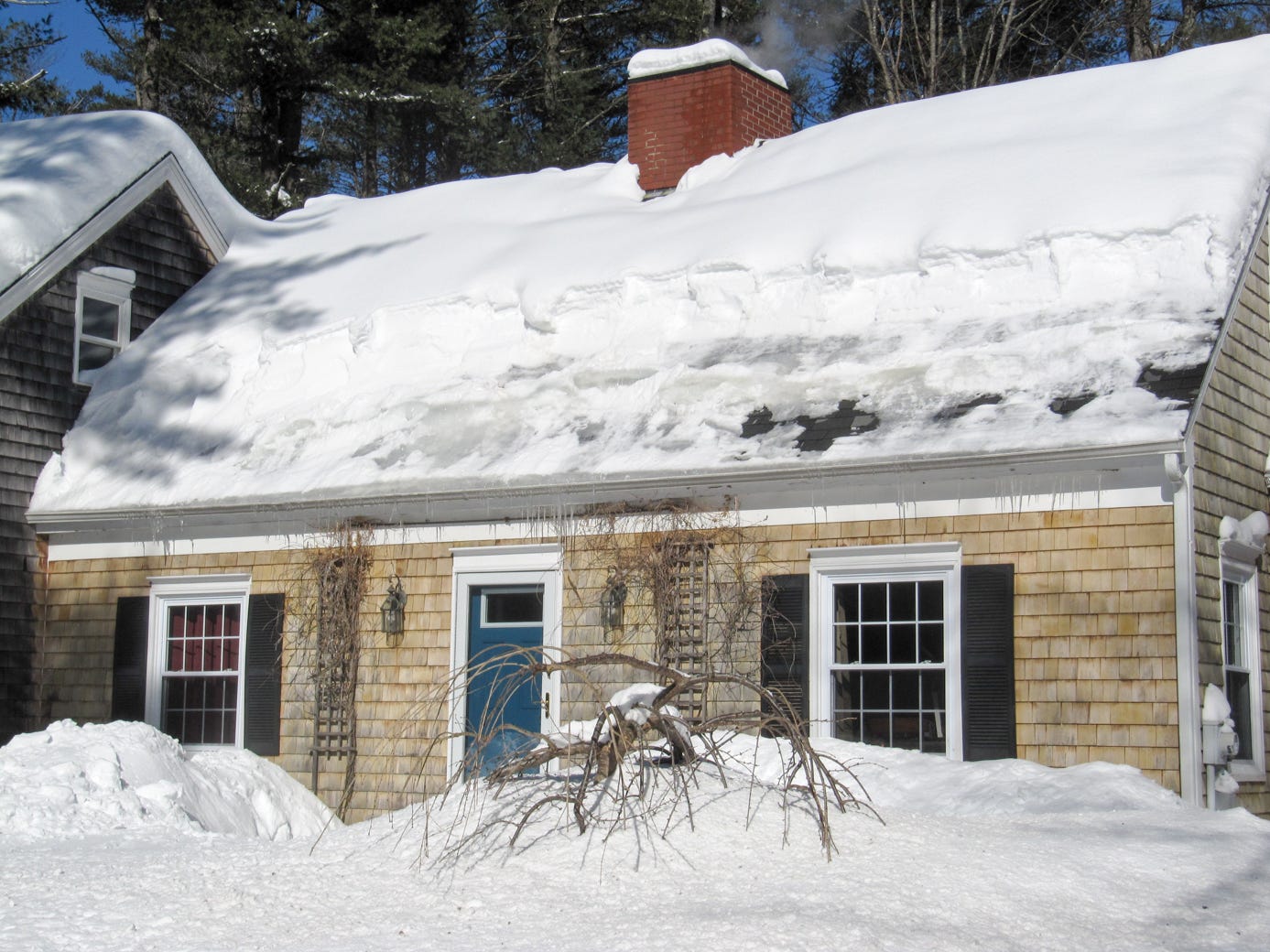
In all of these situations, one quiet question looms: who’s watching the house when you’re not there?
🧭 Do You Really Need a Caretaker or Property Manager?
If your home sits on a year-round road, has reliable heat, and you can check in every few weeks, you might get away without one — but most second-home owners eventually decide some kind of oversight is worth the peace of mind.
Even the most well-winterized home can fall victim to frozen pipes, heat loss, ice dams, or animal intrusion. Power outages in January can last days. And in parts of Carroll and Belknap Counties, emergency access may be delayed if roads aren’t maintained in the off-season.
Think of caretaking as a spectrum rather than a single service: it could be anything from giving a neighbor a key and your phone number and asking them to keep an eye on things to having a licensed and bonded full service firm on retainer who will do weekly checks and authorize any repairs as needed. And, of course, there are infinite variations between these two ends.
Any approach works — the key is matching the, level of oversight to your property’s risk factors, infrastructure, and accessibility.
🔍 What to Look for When Hiring a Caretaker
A good caretaker is part detective, part neighbor, part first responder. When you’re interviewing or asking for referrals, here are questions worth asking:
How often will you inspect the property?
Weekly visits are ideal during freeze-thaw months; monthly may suffice mid-winter if systems are stable.Do you provide written reports or photos?
Documentation protects both sides — and helps track small issues before they grow.Are you insured or bonded?
A must for anyone holding keys or authorizing repairs.What vendors do you work with?
Look for relationships with local plumbers, HVAC techs, and snow-removal contractors who respond quickly.Do you handle emergencies or just inspections?
Some caretakers simply report issues; others coordinate immediate service calls.What’s your fee structure?
Expect anywhere from $75–$150 per visit for small-scale caretakers to monthly retainers of $300–$800+ for full management, depending on the size and complexity of the home.
🧰 What They Actually Do
The best caretakers go beyond “check the thermostat.” Here’s what’s typically included in a standard visit — and what extra services might be available:
Routine Checks
Confirm heat is on and stable
Check plumbing and sump systems
Verify power, Wi-Fi, and security systems
Look for leaks, pests, or frost buildup
After-Storm Inspections
Roof and siding damage
Ice or snow accumulation on decks and walkways
Downed trees, blocked driveways, or loss of utilities
Optional Add-Ons
Snow removal coordination
Cleaning or turnover between guest stays
Receiving deliveries or service personnel
Spring re-opening / fall closing assistance
Many caretakers also function as a local contact for alarm companies or town services — meaning if your furnace fails or a tree falls on the roof, you get a phone call, not a catastrophe.
🪶 The Local Advantage
It’s easy to underestimate how much difference a local presence makes until you’ve had to manage a frozen house from 150 miles away. The best caretakers live here. They know which plow drivers are reliable, which roads wash out first, and when the ice fishermen will start venturing out on Wentworth or Lovell — because that’s when the snow load on your porch roof needs checking.
The best caretakers don’t just protect structures — they preserve stories. They know who built the home, which plumber last serviced the boiler, where the fuse box hides behind a painting, and which neighbor to call when a delivery truck gets stuck halfway down the drive.
They become, in a sense, part of the home’s memory — witnesses to the quiet months that keep the rest of the year running smoothly.
So when you think about property management, don’t just think about checklists. Think about stewardship. Think about the people who keep the Lakes Region’s homes breathing through the snow and silence — so that when you return in spring, it’s as if the house never missed you at all.
In a place where population can double in summer and halve by December, caretakers are the thread that connects the seasonal and the year-round. Whether it’s a neighbor with a spare key or a full-service firm, the right person ensures your home weathers winter as gracefully as the pines that surround it.
Here’s to life between the lakes and the mountains.
Keys to the Lakes
— Jenn & Andrea
