

We started this series looking at water access under $500K. From there it was the $750K tier, then multi-million-dollar waterfront, then what your money buys once you step away from the water entirely, and we took a look at old farmhouses as a type. This installment is a different kind of turn: not a price tier, not even a property type in the usual sense. This time we’re looking at land.
People contact me to talk about buying land all the time. Most of the time, they’re long term investors and they’re pretty knowledgable about what buying land means. Sometimes, they’re looking to see what a parcel they’ve been sitting on for a decade or so is currently worth. But sometimes, it’s a different conversation.
Every so often, a buyer I’ve been working with tells me some version of the same thing after we’ve seen a few houses together. They’ve been through six houses that were almost right. The kitchen was renovated but the layout made no sense. The bones were good but the price seemed way too high for the amount of renovations they would need to make to be excited about the home. The one they actually loved got outbid by cash before they finished their coffee.
So they start thinking about land instead. Sometimes they quote country music songs: just buy the dirt, they say. Build exactly what we want. No compromises, no previous owner’s decisions to undo, no inspection report full of things somebody else let slide for twenty years. And when you’ve been looking at houses in the high $700s, land can feel cheap and easy.
I understand the appeal completely. I also think it’s worth saying clearly, before anyone gets too far into the daydream: land is not a blank slate. It just hasn’t told you what it costs yet. If real estate were a game, buying a house is poker and buying land is roulette. Poker rewards what you know. Roulette doesn't care what you know; the wheel was already weighted before you sat down, you just can't see how. That's land. The wetlands, the ledge, the soil that won't pass a perc test, all of it was decided a long time ago. You're not going to outwit the house; you’re just deciding whether you want to play.
I pulled five parcels currently for sale across Belknap and Carroll counties, priced from just under $100,000 to just under a million dollars. Not because acreage or location matter more than everything else, but because together they make the same point from different angles. The price of land and the cost of land are two different numbers, and the gap between them is where all the real decisions live.
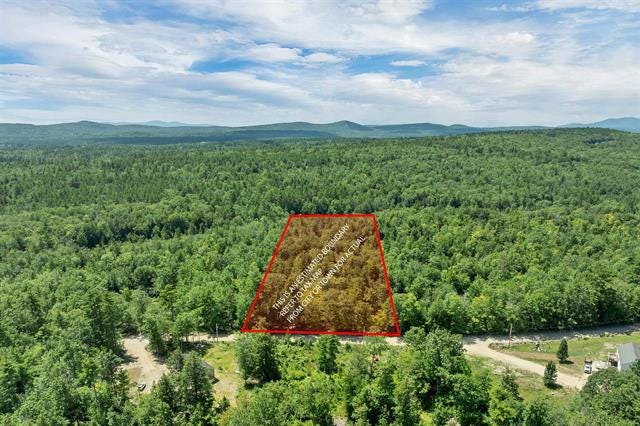
Wakefield — 00 Leighton Corner Road, MLS #5101256, 6.57 acres, $99,900. This is the number that gets people excited, the one that makes land feel like the obvious answer to a house market that makes buyers feel defeated. And it’s a genuinely nice parcel: surveyed, wildlife and trails nearby, close enough to North Conway and the Seacoast to feel central rather than remote. But the listing itself notes wetlands on the property, with the buildable area sited outside the flood zone to work around them. Water source is listed as unknown. None of that means walk away. It means before this number means anything, you need a wetlands delineation and a real answer on where your well goes, because “outside the flood zone” and “easy to build on” aren’t the same sentence.
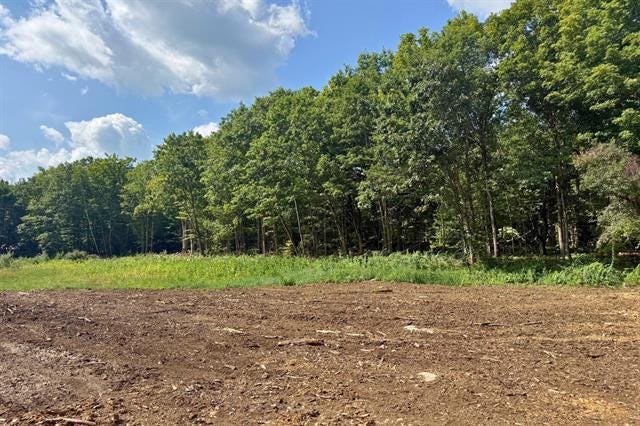
Sanbornton — Lot 9-1 Roxbury Road, MLS #5105403, 5.00 acres, $169,900. This one is freshly cleared and subdivided off Roxbury Road, which means nothing has been tested yet. No well dug, no septic designed, no proof that the ground under those trees will support the house you're already picturing. That puts you at a fork before you've even made an offer. Either you buy on faith, betting that a lot this size in this location will work out, or you pay to find out first, which means testing land you might not end up owning. A perc test in New Hampshire typically runs $750 to $1,900, sometimes more if the site needs multiple test holes. A well is the bigger unknown: this part of the state sits on granite bedrock, and a complete system, drilling, casing, pump, the works, commonly lands between $5,000 and $20,000, occasionally more if the driller has to go deep to hit water. Neither of those tells you what a septic system will ultimately cost to install once it's designed, only what it costs to find out if you can. That's the real choice on a lot like this: speculate and hope, or spend a few thousand dollars just to stop guessing.
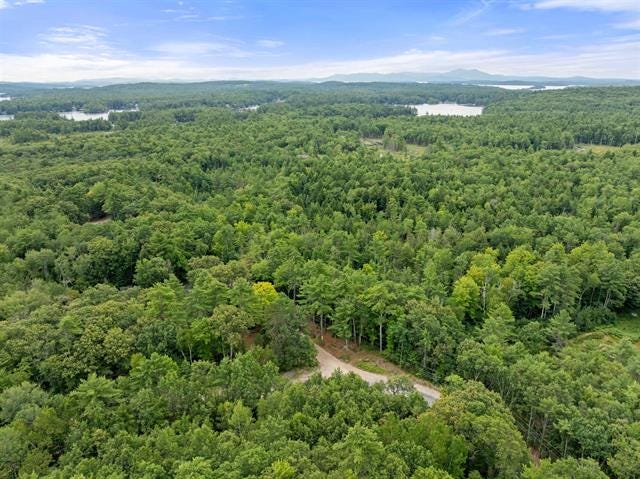
Moultonborough — 00 Gilman Point Road (Unit/Lot 2), MLS #5102302, 8.38 acres, $195,000. This one has done more homework than the first two. It's surveyed, with 327 feet of road frontage, and it's already been perc tested with data on file good for a four bedroom system. That's not nothing. Somebody spent real money finding that out so you don't have to gamble on it. The tradeoff: it can't be subdivided further, so what you see is what you get. And the road access is a mix of association, private, and public maintained sections, which is worth understanding before you assume year round plow service is guaranteed. Public maintained means the town shows up. The other two mean someone else does, or nobody has agreed on it in writing, and you don't want to find that out in the middle of a February storm.
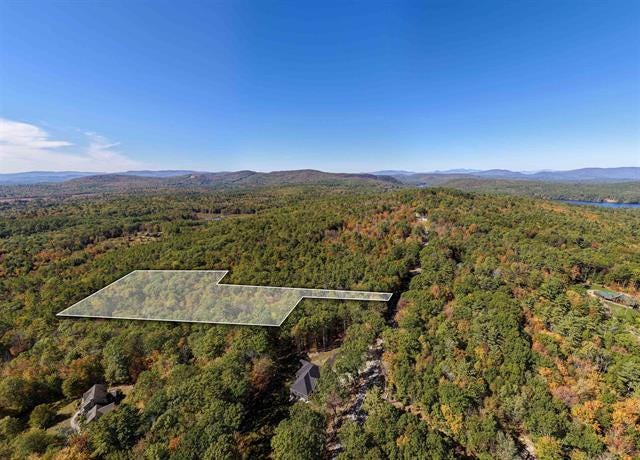
Meredith — Lot 1 Winona Road, MLS #5093680, 7.79 acres, $235,000. The most finished of the four. Surveyed, paved public road frontage, and the home site and driveway have already been cleared, which saves real money before you’ve broken ground on anything else. It’s close to the Meredith town docks and has beach access to Lake Winnipesaukee, though that access is for municipal residents generally, which is worth knowing before anyone pictures private waterfront that isn’t actually part of the deal. There’s also a current use penalty the buyer will owe at closing, a relatively minor but real additional cost before your builder has so much as drafted a site plan.
And then there’s the one that changes the whole conversation.
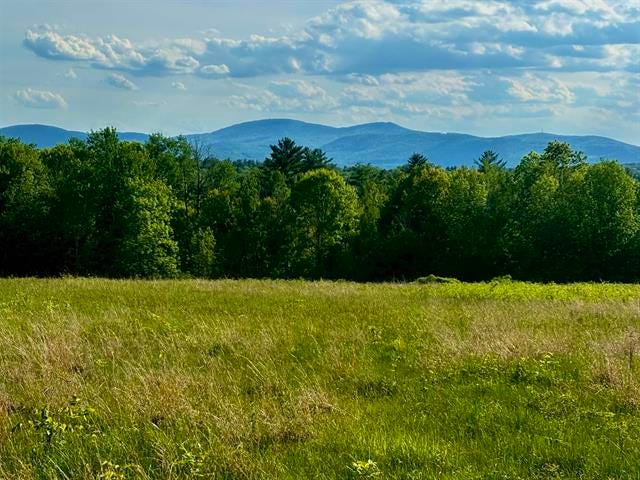
Wolfeboro — 580 C Pine Hill Road, MLS #5091791, 20 acres, $980,000. Nearly a million dollars, and it isn’t even a finished lot yet. It hasn’t been surveyed. It’s being offered as part of a planned subdivision that hasn’t happened, on what the listing calls a risk free reservation, meaning you’re securing your spot in a plan, not purchasing a parcel with drawn boundaries. At roughly $49,000 an acre, it’s priced well above everything else on this list, largely for the view and the proximity to town and the lake. But price per acre and readiness per acre are not the same thing. You can spend more money here than on any other parcel in this piece and still be, in the most literal sense, waiting to find out exactly what you bought.
That’s the thing nobody tells you when land starts to look like the easy way out of a frustrating house search. The sticker price is never the real number. Every one of these parcels needs a well, unless one exists. A septic system, designed and approved. A driveway, cleared and graded. Power brought in from the road, sometimes a significant distance. Permitting timelines that don’t care how ready you feel. And then the actual build, at construction costs that have not gotten friendlier in the last few years.
None of that makes land a bad idea. People do this well all the time, and it can become exactly the right answer when the existing housing stock genuinely can’t give you what you need. But it only works when you go in knowing the land is not the finish line. It’s the starting line, and the real number is whatever the finish line ends up costing once you get there. And it only works if you’re okay with a lot of unknowns and have the stamina, the disposition, and the budget to roll with the punches. Because I’ve never heard of a custom build that didn’t leave everyone involved just a little bit bruised and bloody.
This series has moved through water access, price tiers, waterfront, and now land itself, and the thread underneath all of it is the same: the number on the listing is never the whole answer. Next up, we’ll get back to standing structures with a look at what it actually takes to buy a property as a vacation rental investment.
If you’re circling the idea of building instead of buying, I’m always happy to walk through what a specific parcel would actually take to bring to life; the wells and the septic and the permitting and all of it, before you fall in love with an acreage number or a dream house design that doesn’t tell the whole story.
Here’s to knowing what you’re in for, or that you’re in for whatever happens.
🧭 Jenn
Keys to the Lakes
