Here’s something nobody tells you when you’re falling in love with a lakefront property: the lake comes with a community. Not just neighbors in the loose sense. A structured, dues-paying, meeting-attending, vote-casting community. One with opinions about wake boats, dock setbacks, and whether that new pavilion should go up before or after the boat launch gets repaved.
Welcome to the lake association.
If you’re relocating from somewhere that runs on HOAs, you already know the general shape of this: a governing body, shared amenities, fees, rules. But lake associations aren’t quite the same thing, and the differences matter in ways that can genuinely affect how much you enjoy owning property here. And, if the lake is big enough (like Lake Winnipesauke) there isn’t one lake association, but many, organized around the different access points.
So let’s talk about what they are, what they actually do, and what you should find out before you buy.
What a Lake Association Is (and Isn’t)
A lake association is a private, member-governed organization made up of property owners whose land abuts or has deeded access to a specific body of water. Membership is sometimes mandatory if it’s tied to your deeded rights; sometimes it’s voluntary but strongly encouraged; occasionally it’s truly optional and mostly exists as a social club with a boat launch key.
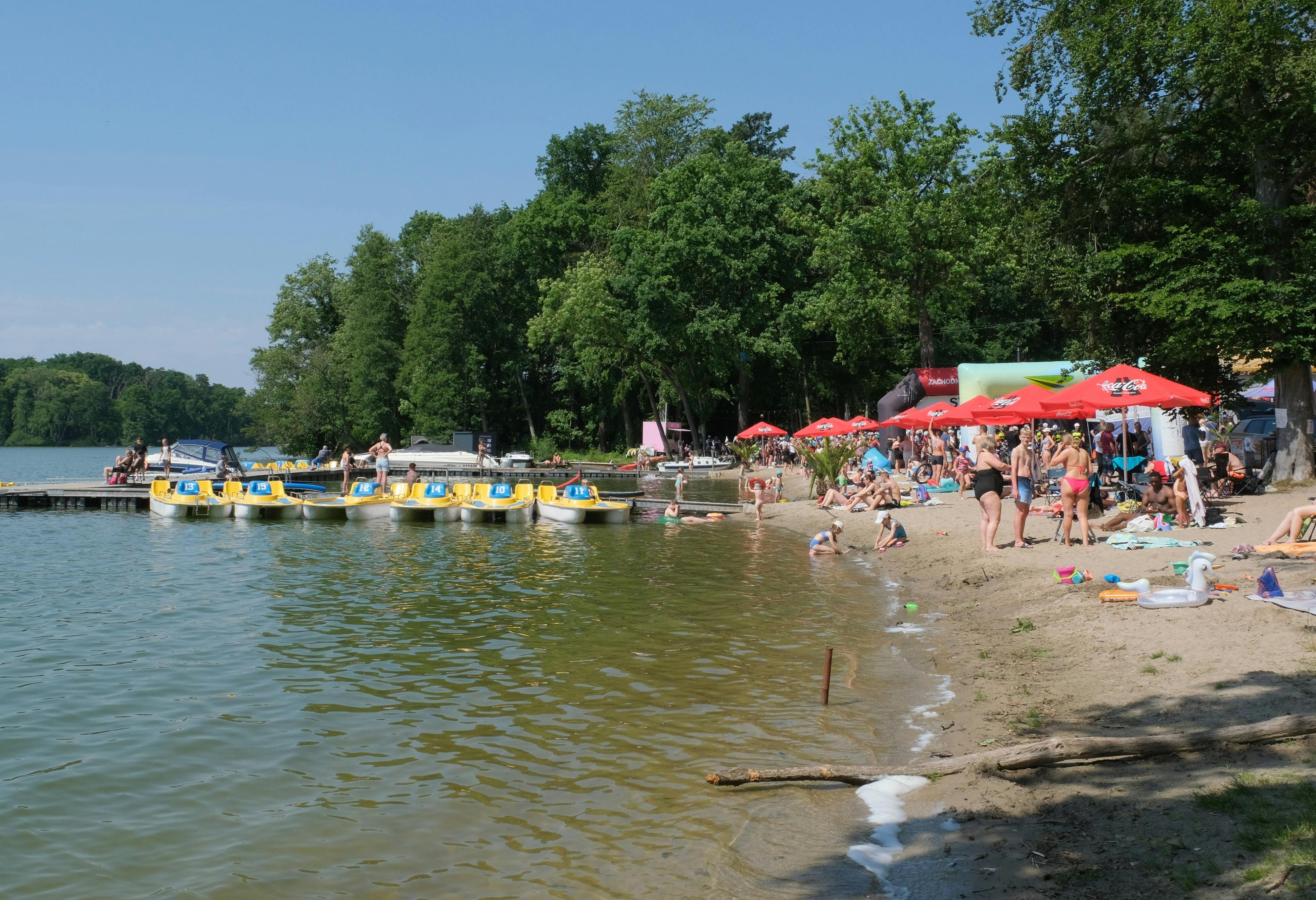
The distinction from a standard HOA matters. An HOA typically governs your property: the look of your house, what you can park in your driveway, whether your fence height is compliant. A lake association typically governs shared water access and the infrastructure around it; the common beach, the boat launch, the docks, water quality monitoring, and sometimes weed management in the lake itself.
Both involve fees. Both involve rules. Both involve other humans with opinions. But the focus is different, and the culture can be very different.

What They Actually Manage
Depending on the lake and the association’s age and organization level, you might find them managing water quality testing, invasive species monitoring and treatment, a common beach, a boat launch, shared docking infrastructure, community events, rules about boats (size, type, horsepower limits, no-wake hours), and rules about docks (length, materials, seasonal removal). Some are lean and functional: they collect dues, maintain the launch, test the water, and see you at the annual meeting. Others have grown into something more elaborate, with committees and sub-committees and a newsletter and a waitlist for dock space.
Neither is inherently better. It depends entirely on what you want from lake life.
The Fees: What They Cover and What They Don’t
Annual dues in the Lakes Region typically run anywhere from a few hundred dollars to well over a thousand, depending on the association, the amenities, and what’s been deferred or planned. Some include boat launch access in the base fee; others charge separately. Some have assessed members for major capital projects; others are sitting on a small reserve that hasn’t been touched in years.
What you want to know before you buy is not just what the current annual fee is. It’s what’s coming. An aging dock system, a boat launch in need of repaving, a shoreline restoration project that’s been on the agenda for three years... these things eventually get funded by assessments, and assessments are not always small. Ask for the financial statements. Ask about the reserve fund. Ask if any capital projects are under discussion.
The Politics: Small-Town Democracy in Action
Here’s the part we find quietly fascinating: lake associations are tiny democracies. One vote per property (usually). Annual meetings where actual things get decided. Neighbors with genuinely different opinions about what the lake should be, who gets to use it, and how.
We’ve heard stories of associations that function beautifully; neighbors who disagree at the August meeting and wave at each other on the water in September, because the lake is bigger than any one vote. We’ve also heard stories of associations where the “summer people” and the “locals” have had the same argument for a decade, and the annual meeting carries the energy of a town council in an election year.
Most fall somewhere in the middle. Functional, a little messy, deeply human.
If you are someone who enjoys being part of a shared governance structure, who doesn’t mind showing up and having a say, you may genuinely love it. If you bought waterfront property specifically to be left alone by other humans... you may find it more friction than you expected. Both responses are valid. Worth knowing which one you are before you close.
Some People Love Them. Some Find Them Annoying. Both Are True.
We’ve watched buyers fall in love with lake communities because of their associations; the organized beach cleanup, the summer social, the neighbor who’s been monitoring water clarity for twenty years and can tell you exactly what the algae situation was in 2019. There’s something genuinely good about shared stewardship of a shared resource.
We’ve also watched buyers discover mid-summer that the association has strict no-wake hours until 10 AM, enforced enthusiastically by the neighbor in the third cottage. Which is either reassuring or annoying depending entirely on what you planned to do on Tuesday mornings.
The lake itself is neutral. But, it comes with a community, and that community has a culture. Finding out what that culture is before you buy is one of the more useful things we can help you do.
Questions to Ask Before You Buy
Worth naming clearly, even if some of this has already surfaced above:
What are the annual dues, and what do they cover? Are there separate fees for launch access, dock space, or beach use?
What is the reserve fund situation? Any capital projects under discussion or planned?
What rules govern docks and boats? Type, size, motor horsepower, no-wake hours?
How are decisions made? What’s the voting structure, and how often does the association meet?
Can you review the meeting minutes from the past two years? This one is worth emphasizing. You will learn more about the real culture of an association from two years of minutes than from any description of it.
How active is enforcement, and who does it? Is it a formal board function or more of a neighbors-reminding-neighbors culture?
Are there any ongoing disputes; with state regulators, the town, or among members?
There are different ways to get these questions answered. Sometimes, its easiest to go through your agent who will likely go through the listing agent. Sometimes it’s better to have a direct conversation with a board member. Sometimes it’s all about knowing who to ask.
One More Thing
Lake associations exist because lakes require shared stewardship. One person’s dock, one person’s boat, one person’s fertilizer choices affect everyone downhill and downlake. The association is the mechanism through which neighbors work that out, imperfectly and humanly, over time.
Some of the most genuinely connected communities we know of in this region are lake association communities. The shared resource creates a reason to know each other.
Worth knowing what you’re buying into, in every sense.
Here’s to finding the lake that fits not just your idea of water, but your idea of neighbors.
🏞️ Jenn & Andrea
Keys to the Lakes