

There’s something about a lake view that never goes out of style. The light hits the water, the loons start their evening chorus, and for a second you think, this is what all the fuss is about.
Picture this: it’s the summer of 1955. You’ve just found a modest little camp on a quiet cove in the Lakes Region of New Hampshire. Maybe it has a sagging dock, wood-panel walls, and that breathtaking view of water ringed by maples, cedars, and pines. Fast forward to today — same cove, same trees whispering in the breeze, but the price tag? Let’s just say you’re gonna need a bigger boat. 😉
In this post we want to dive into how the value of lake-views has evolved over the decades — what you would have paid then, what buyers were paying in the 1990s, and what the market looks like now. More importantly: what it means for you today. Because here’s the key takeaway: there’s no such thing as waiting for the “perfect” price point — there’s only enjoying your now and investing in your future. Try to game the market and your grandkids will probably wish they you had bought back when houses on Winni were “only” $3M. Buy today, and generations will thank you.
Let’s take a little time-travel trip around the Lakes Region and see what a lake-view life would have cost you in different eras — and what, exactly, you’d be getting for your money.
1950s: When a “Camp” Meant Just That
Back in the day, a lake house wasn’t a “second home.” It was a camp — maybe with hand-built bunks, mismatched dishes, and a woodstove that smoked a little if you weren’t careful. The plumbing? Let’s just say it had personality.
Average lake-view home price: around $15,000 – $25,000 (give or take a few wooden nickels). These were seasonal camps, built for simplicity and joy rather than show.
Amenities: running water if you were lucky, a screened porch, and neighbors who brought blueberry pie instead of boundary disputes.
Lifestyle: morning swims, penny candy, no Wi-Fi, and no stress about resale value.
The “value” then: see lifestyle above. A boat ride, a swim, the sound of loons at twilight.
Lesson from the ’50s: people weren’t “timing the market” — they were just timing the sunset. And if you’ve been surprised by some of the interiors in homes currently on the market that look like they haven’t been updated since this era— they probably haven’t because the same family has been enjoying “camp” ever since.

1990s: The Rise of the Weekend Warrior
By the ’90s, the Lakes Region had gone from “our little secret” to “let’s beat Friday traffic to the lake.” Boston buyers arrived with cell phones the size of sandwich loaves, and “camps” became “vacation homes.”
Average lake-view home price: roughly $250,000 – $400,000
Amenities: paved roads, real insulation, maybe a whirlpool tub and a big deck for that new thing called grilling season.
Lifestyle: Think drive-in theaters, town ice cream stands, and the first big wave of second-home pride.
The “value” then: lifestyle plus aspirational. It became about legacy, about owning a piece of the vacation-home dream.
Lesson from the ’90s: buying here wasn’t just a splurge — it was a reward for surviving dial-up internet and the dot-com bubble.
Today: The Luxury of the Lakes
Now? The “camp” has evolved into a lifestyle brand. The same view that once came with a hand-pumped well now comes with radiant heat, smart lighting, and an espresso bar in the boathouse.
Average lake-view home price: anywhere from $800,000 to $1.5 million, with waterfront often well above $3 million
Amenities: farm-to-table dining in Wolfeboro, artisan coffee in Meredith, live theater in Tamworth, and the kind of restaurants that make you dress up… but only a little.
Lifestyle: paddleboard mornings, farmstand afternoons, dinner on the deck with friends you actually like.
The “value” now: lifestyle + investment + legacy. Buyers are not just considering “can we afford this?” but “what will this give us in time, memory, resale, family story?”
Lesson from now: you’re not just buying property — you’re buying into a way of life that values beauty, connection, and breathing room. The numbers may be higher; the stakes may feel larger. But the essence remains unchanged: the view, the water, the weekend escape, the place where generations gather.
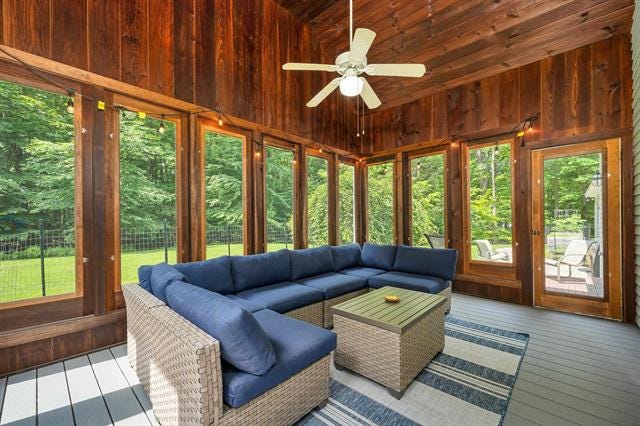
The Real Point
Whether you could have bought in the 1950s for tens of thousands, the 1990s for a few hundred thousand, or are looking now in the millions — the truth is: waiting for the perfect price point often means missing the point.
Here’s the truth: there’s no such thing as “waiting for the right price.” The right price was yesterday’s — and tomorrow’s — and today’s.
If you buy with intention, love the place you live, and take care of it, that’s what grows in value — not just the number on a spreadsheet, but the generations who’ll sit on that same porch decades from now and say, “I’m so glad they did this.”
Because in the end, you’re not just investing in real estate — you’re investing in the laughter and sighs of gratitude of the generations to come.
And that kind of return? It’s hard to measure, but easy to feel.
Here’s to life between the lakes and the mountains.
— Jenn & Andrea
Keys to the Lakes
