

When we moved up here, it was in part to fulfill a long-held homesteading fantasy. One of the first instantiations of that dream, other than the land and the old farmhouse, was the addition of two young Great Pyrenees. These dogs have been bred for generations to guard something, to make independent decisions, and to roam while doing these things. I got them some very fancy collars that were supposed to work like an invisible fence — a signal that buzzes when they hit the boundary, meant to turn them around before they get any further. We trained for weeks. The trouble is that the alert was never quite stronger than their curiosity. They’d feel it, pause, and go exploring anyway. I could watch their path on my phone and was frankly impressed by the amount of territory they considered worth guarding.
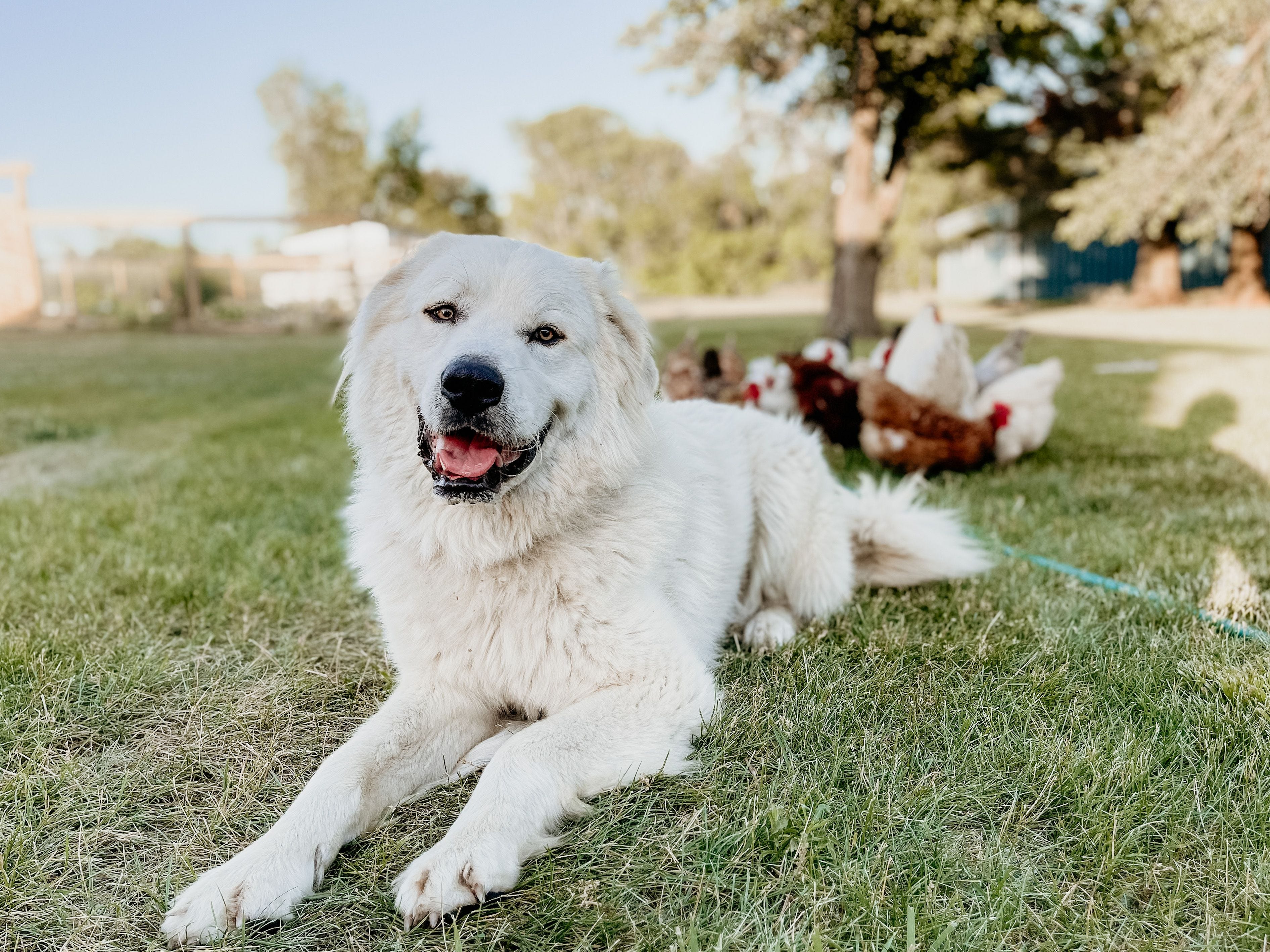
And, while I’m sure no one loved it, most of my neighbors would casually report, “saw the dogs, headed toward’s J.’s house” and not really mind it because they never did any damage and they never stayed for long. Except for when they went across the road to my neighbor G.’s house. She has lovely gardens and a lot of livestock and an LGD of her own. She wasn’t happy with their intrusions, peaceful as they were and of course she was in the right. Even so, I could never fully blame them. I keep promising them something more interesting to guard than a dozen chickens and haven’t delivered. And I kind of want to go hang out in her gardens, too, they’re lovely. Eventually I admitted the “training” I kept doing on boundaries wasn’t working and I put up a six-foot fence with more authority than a beep. G. and I made peace, though I don’t think she’s going to be inviting me over for tea in the garden anytime soon. And my other neighbors chuckled that this city girl finally learned the lesson. Good fences really do make good neighbors.
Here’s the deeper thing, though. In a way, that whole experience is a microcosm of life up here. It’s all yours, but how you enjoy it is limited in different ways at different times of the year. And understanding the rules…and when they can be broken is a key lesson to living well here. So, yeah, I understand the ignoring-the-boundary part better than I’d like to admit, because I do it too, every July.
In May, Lake Winnipeesaukee at six in the evening is mine. I mean that almost literally — one other car in the lot where I launch my kayak, usually a fisherman who nods and doesn’t talk, which is its own kind of hospitality. I launch and paddle for hours without seeing a single motor boat, I listen to see if any of the loons have returned, and I drive home.
By the third Saturday in July, the same lake is crisscrossed with sails and motorboats, and music from somebody’s jetski carries further than they think it does. If I’m going to swim or kayak, I will be constrained to a small cove or a friends private beach. I know this before I go. I know exactly what a Saturday afternoon on Winni looks like in July, the same way my dogs know where the fence line is. And some weeks I go anyway, because the pull toward that water is stronger than my good sense about the crowd I’ll find there. The lake didn’t change, even though it feels like an entirely different place. What changed is how much patience the season asks of me for the privilege of being in it.
That’s the part I didn’t understand before I lived here year-round — that summer isn’t one season happening to everybody equally. It’s several different summers, happening on parallel tracks, stacked on the same water, depending on what your reason for being here is.
My inbox in July is full of a summer I don’t fully get to have. Friends who are retired up here invite me to a day of boating, a talk at the library, lunch on a patio somewhere, trivia night at the tavern. Their version of the season has no weekly planner and no clock defining it — Tuesday and Saturday are the same to them, and an afternoon can stretch as long as the conversation wants it to. I say yes when I can and no far more often than I want to, and somewhere underneath the no there’s a small nugget of envy. I know that version of summer is coming for me eventually. It’s just not here yet.
The visitors have a different summer still, one I encounter every time I walk into town. At 7:15 most mornings in most months, Lino’s means a stool at the counter and coffee poured before I’ve fully sat down, quiet enough to read half an article or chat with with a neighbor while my youngest finishes his hash browns before his shift at the market in Wakefield. In July, 7:15 means standing by the door behind two families who got up early on vacation because someone told them the pancakes were worth it. They’re right, for what it’s worth. I’ve learned to eat at home July mornings and save Lino’s for the months when it’s mine again in the way it is the rest of the year. I don’t resent those visitors for this. A family on day four of a week they saved all year for is operating on a completely different clock than I am — every hour has to count for them in a way it doesn’t have to for someone who’ll still be here in October.
Parking in Wolfeboro tells the same story. From October to May, I pull into a quiet town, park just outside the office, and am inside in 30 seconds. In July, it’s two or three loops, sometimes a spot three streets further out than I’d like. I don’t mind this at all, mostly because of what happens once I’m out of the car. Main Street in July looks like something built for a movie — kids with pigtails and fishing rods eating ice cream while they head back towards the water, parents pushing strollers with the specific exhaustion of people on day four of that same hard-earned week, the Mount Washington’s horn sounding as she docks to take on another round of passengers seeing all of this for the first time. I walk a little slower in July than I do in February. Not because I have to. Because there’s a version of delight happening around me that’s worth witnessing, even from the outside of it.
Book club has learned not to count on me between June and Labor Day. So has my knitting circle. This is the quieter cost, the one nobody mentions when they’re selling you on moving here full-time. It isn’t the traffic or the crowds. It’s that the rhythms that make a place feel like home instead of scenery go dormant for a season, because everyone who runs the diner or teaches the class or organizes the meeting is also working the extra shifts the season demands of people who still have to make a living to live here.
Most evenings, once the day’s obligations are done, I pick up the kids and drive away from the crowded big lake to a smaller one — Wentworth some nights, Lovell on others. I float on my back for an hour or so, sometimes less, because there’s a dinner to get to or a kid to drop off somewhere. The loons sound like grief or like joy depending on the day I’ve had. The peaks shift from green to blue to orange and back to blue while the light changes and the evening approaches. It’s a shorter version of summer than my retired friends get and a less intense one than those visiting get. It’s just mine, built around the edges of a life I’m still working to build here, and most nights that’s more than enough.
On the way home, there’s usually a roadside stand with corn and tomatoes still warm from the vine and the just set sun. I eat the tomatoes in the car like apples, because someone grew them ten minutes from where I’ll sleep tonight, and I’ll be here again tomorrow to buy more.
🧭 Jenn
Keys to the Lakes
