

When you move into an old house, you inherit more than floorboards and fieldstone. You inherit the echoes. Spooky season, one of our favorites is now behind us, but we thought before we start preparing for the holidays, we would share one final ghost story with our readers.
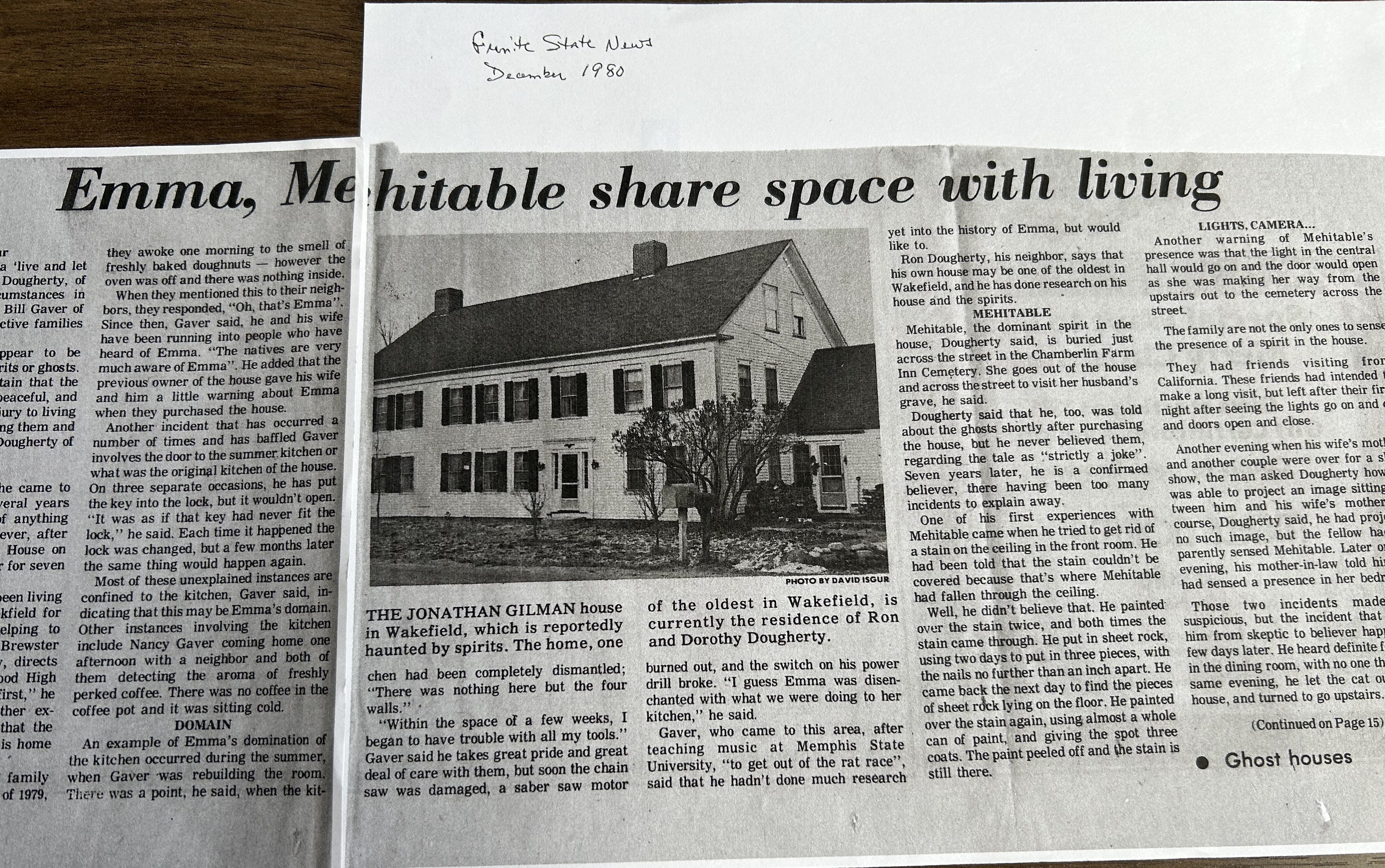
Jennifer’s Wakefield farmhouse — the Jonathan Gilman House — was built back in 1769, long before electricity or even the concept of insulation. The kids just recently realized that meant the house is older than the country, which is kind of overwhelming when you think about it. And as she plans what renovations to make when, the family is thinking a lot about how to ensure we’re honoring the legacy and history of the house, and the families who came before us while also making it more comfortable.
And, just about every long time town resident Jennifer has met has had a story about the house, it’s ghost (or ghosts?), and stories they heard about the house’s past. In it’s 256 years it’s housed only 4 families and it’s concurrently been an inn and pub, a school for young gifted artists, a working farm, and a printing press. The tales are the sort of local legends you laugh off when you first move in. Until the doors start opening on their own. Until the lights flicker when no storm’s in sight. Until the dogs choose not to go near the crumbling barn foundation after twilight. Until the distinct sound of footsteps on the old pine floors when you know you’re home alone sends your heart racing — and your rational mind scrambling for explanations that never quite fit.
The Granite State News ran an article about the house back in 1980, calling it “one of the oldest homes still standing in Wakefield.” That same article mentioned its other claim to fame: a resident spirit named Mehitable. According to the story, Mehitable was a Gilman family member who died after a fall — leaving a spot, the article noted, where a stain has refused to fade for over a century. She’s buried just across the road in a small family cemetery.
When the House Speaks
Jennifer has had guests who’ve stayed overnight and mentioned a feeling of “someone” in the upstairs bedroom. The one time her sister stayed overnight with her then infant she came down to breakfast and told a story of moving shadows and whispers from the adjoining nursery. Incredibly pragmatic and scientific, Jenn’s sister said she got so anxious, she finally spoke out into the darkness, “you’re scaring me, I need to know the baby is okay.” And she said she immediately felt a wave of comfort and the room vibe shifted. Jennifer couldn’t believe what she was hearing…but her sister has always chosen to drive back home since that night so it seems she genuinely felt something. Similar reports have been brushed off with humor, but Jennifer admits — there are moments the air changes in that room. It feels less like fear, more like presence. She knows, because Jenn stopped putting guests in it and made it the primary bedroom instead.
The most unnerving — or comforting, depending on your view — happened one night when Jenn woke to a whispered message in her ear. It was quiet, but clear. Advice about one of her teenagers, something she would never have predicted. Following that small nudge saved her from what can only be described as an unpleasant surprise.
Coincidence? Maybe. But as any historic home owner will tell you, these places hold things. Stories. Sorrows. Joy. Energy.
The Living History of Home
Living in a centuries-old home is an act of stewardship. You don’t own it so much as you share space with everyone who’s ever been there before. The walls have soaked up laughter and grief in equal measure. Every repair is a conversation between what was and what will be. And, when done well, it carries the beauty of the home into the future while honoring the spirit (no pun intended) of past eras.
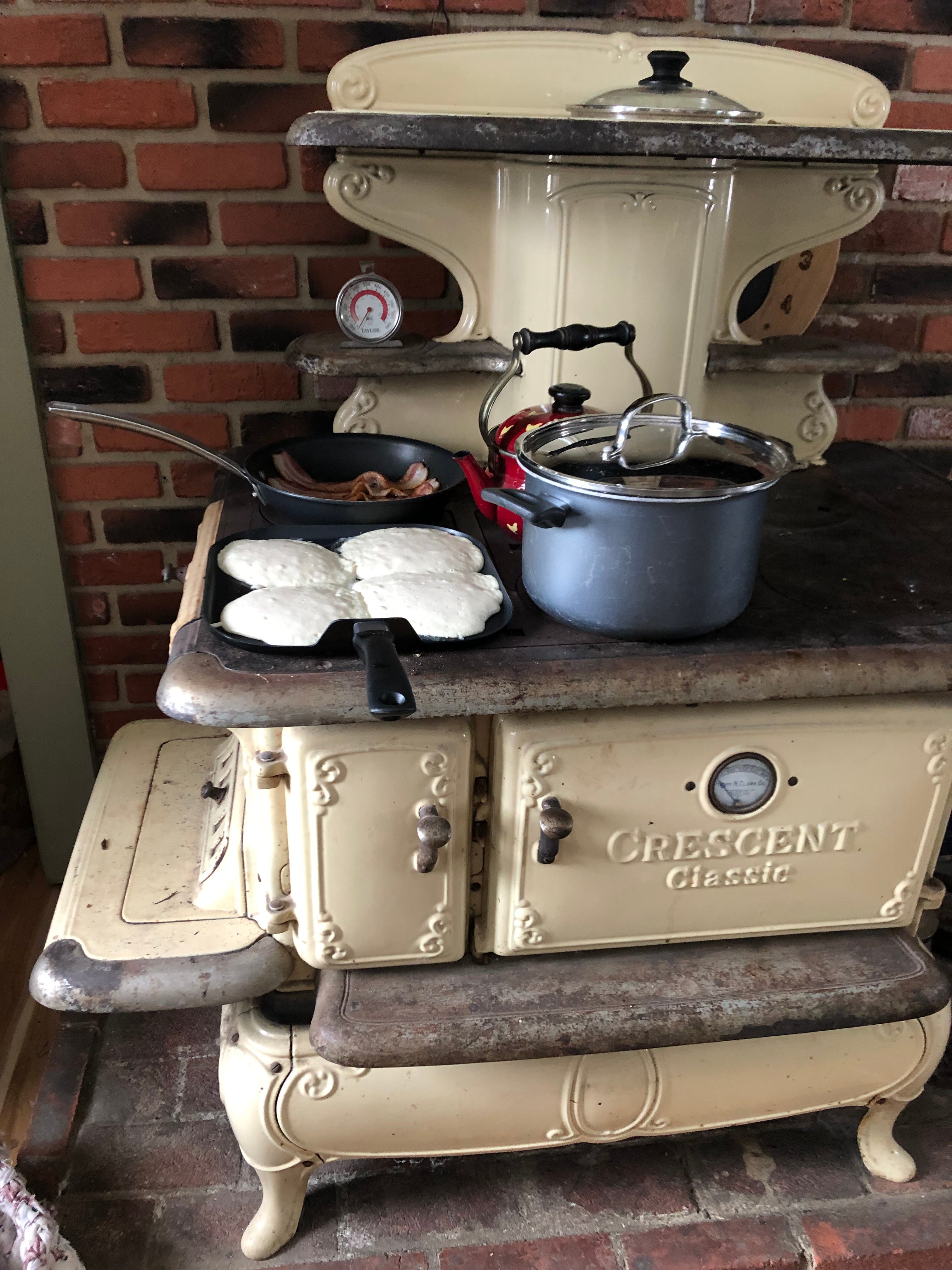
When you tear out old plaster or sand down beams, you’re peeling back the fingerprints of time. It’s why some nights, after a long day of client showings in new builds or mid-century lake houses, Jennifer sits quietly with the lights low and imagines all the lives this house has sheltered — the hands that built it, the meals cooked on the 1920s wood cookstove she still uses during power outages, the winters endured when “central heat” meant a wool blanket, a lively fire, and a prayer. And only then does she consider whether to rebuild the fireplaces or install a pellet stove insert.
Modern life tends to prize the new — new construction, new appliances, clean slates. But there’s something deeply grounding about living inside and with history. It changes the way you see your role in a place. You start to feel like a caretaker of not just a property, but a continuum.
Maybe you accept that every floor slopes. Maybe you leave an old nail untouched because it feels wrong to pull it out. Maybe you light a candle in a drafty corner, half to see, half to say thank you. Thank you for building something that has lasted.
After all, homes — like people — are layered. And some layers just won’t be painted over.
Here’s to life between the lakes and the mountains.
Keys to the Lakes
— Jenn & Andrea
