Right now, somewhere in the Lakes Region, a boat is coming out of the water for the last time this year. A dock is being pulled. Someone is standing on the lawn, facing away from the lake for once, looking at a house they’ve owned for a decade, doing quiet math they haven’t said out loud yet.
I watch this happen every fall. Not everyone who owns a lake or ski property is ready to sell. Most folks will tell you they held on longer than they probably should have. But every September, a specific kind of owner makes a specific kind of decision, and it has nothing to do with the market and everything to do with a summer that felt different than the one before it. Fewer weekends up. A kid who’d rather be somewhere else. A knee that doesn’t love the dock stairs anymore. They spend the season quietly deciding, and by the time the leaves start to turn, they’re ready to list.

This is not the moment most buyers are watching. Everyone tends to think that spring is the best time to shop, when the water’s blue in the listing photos and the summer season is coming up. Which is exactly why fall and winter are the better window if you’re buying for investment, not for your own Saturday afternoons. The owners listing now aren’t testing the market. They’ve already made peace with leaving. That tends to mean more room to negotiate, and properties that show up honestly rather than staged for a July daydream.
There’s a second piece of timing here that’s easy to miss if you’re only thinking about lake season. A property that only works in July is a property that sits empty eight months a year. A property that works for both ski season and lake season doesn’t. The Lakes Region has more of these than people realize, towns close enough to a mountain and a shoreline that a renter booking a February weekend and a renter booking a July week are looking at the same house.
There’s a broader reason this kind of buy makes sense right now, and it has nothing to do with New Hampshire specifically. Open any financial news this year and you’ll find the same unsettled tone, rates that keep everyone guessing, a bond market that seems to have a strong opinion about something new every week, headlines that don’t leave a lot of people feeling steady. I’m not going to pretend to know which of those headlines matters most. What I do know is that a house on a lake, in a town people already plan their year around visiting, doesn’t behave like a ticker. It doesn’t drop eight percent on a Tuesday because of something that happened somewhere else. People still want a week at the lake in July and a weekend near the mountain in February whether the market’s up or down, and often want it more when everything else feels unsteady and they need somewhere to actually stand still and just breathe.
That’s the case for an asset you can also sleep in. It holds value the way land and water tend to, slowly and without much drama, regardless of what’s happening in a boardroom somewhere. New Hampshire helps too. No income tax, no sales tax, which compounds the longer you hold something. This is a bet on the fact that people have been coming to this region for generations, and a well-chosen property here works for you in more ways than the market ever will.
I pulled together five properties, all under $900,000, all offering something closer to year-round rentability than a single-season one. I looked at price, at proximity to both water and skiing, and, because this matters more than most buyers realize until they’re three months into ownership, at what each town actually allows.
Buying a Lakes Region Home You’ll Rent Part-Time? Read This First

It’s been a week since our last post—we took a little breather to recharge, and now we’re roaring into fall ready to go. We hope you’re also taking whatever time you need to rest and recharge. As we refocus for fall, we’re hearing more and more from folks who want the best of both worlds—time at the lake, and income from renting when they can’t be here.…
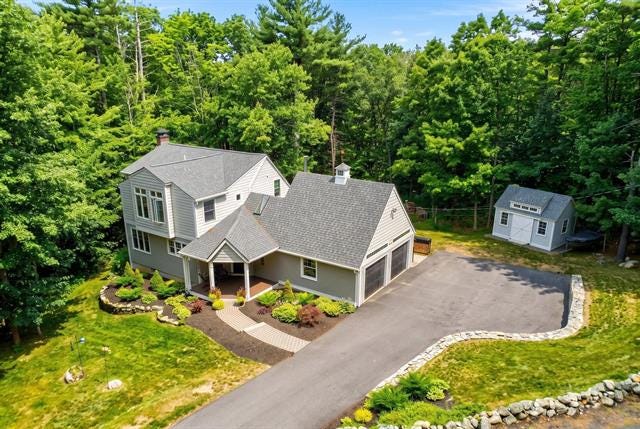
325 Belknap Mountain Road, Gilford — $850,000. Four bedrooms, three baths, sitting across from conservation land with hiking trails right out the door. Gilford residents get exclusive access to Gilford Beach and the town docks on Winnipesaukee, and the town is home to Gunstock, so this is as close to true dual-season as it gets without qualification. Gilford requires a Conditional Use Permit for short-term rentals, a real but well-worn process. Forty-six days on market, which tells me the owner decided early in the season that they’re ready to move on to the next adventure.
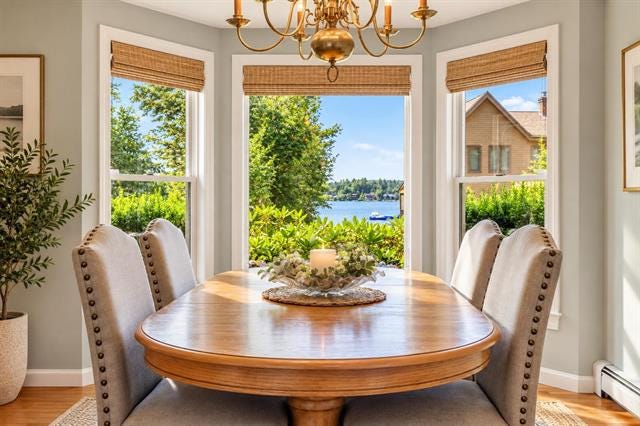
6 Sunset Lane, Moultonborough — $775,000. Three bedrooms in Swallow Point, water views from nearly every room, west-facing sunsets, association access to the lake. The listing itself states no rental restrictions, and says plainly that it works as an investment property with income potential. I’d still call the town before closing, since Moultonborough doesn’t have a dedicated short-term rental ordinance on the books and the planning board has been actively sorting out how to formalize what’s currently handled informally. Worth the phone call. It hasn’t stopped this owner from marketing it as exactly that kind of property.
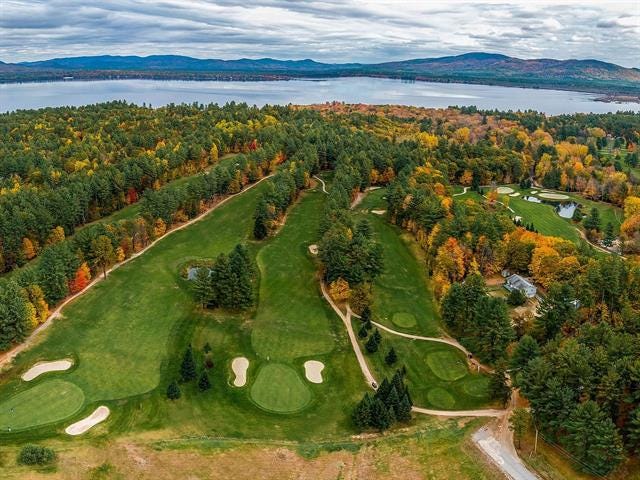
39 Captain Lovewell Lane, Ossipee — $638,984. The lowest entry point in the group, three bedrooms sitting on the Indian Mound Golf Course with association access to Ossipee Lake’s beach. Golfers in the morning, lake in the afternoon, and it’s close enough to the King Pine corridor to pull winter bookings too. Ossipee’s short-term rental ordinance permits rentals in all districts with a business license from the Board of Selectmen, one of the more straightforward paths on this list.
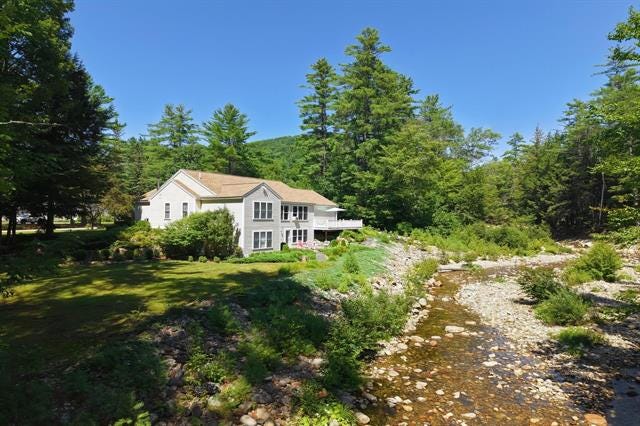
300 Mill Brook Road, Thornton — $739,000. Three bedrooms, brookside, sitting almost exactly between Waterville Valley, Plymouth, and Lincoln. This is the one that leans hardest into ski season without giving up water entirely, two hundred feet of exclusively owned brook frontage and a wall of south-facing windows built for winter light. Thornton permits short-term rentals in every zoning district, and this one comes with a new roof and a fifty-year warranty, which matters more than people think when they’re running the numbers on a rental.
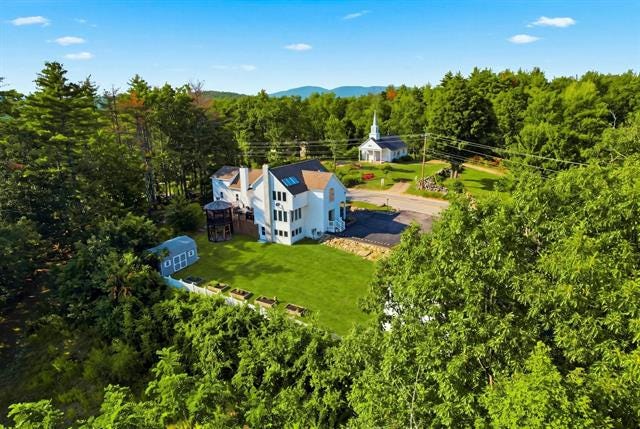
257 Meredith Neck Road, Meredith — $899,000. The biggest of the five, five bedrooms and nearly four thousand square feet on 2.47 private acres a few minutes from downtown Meredith. This is also a property with a short-term rental track record. It’s already been operated that way, with what the listing calls a proven history of guest demand. Meredith allows short-term rentals as an accessory use by special exception, and this house is the proof that the process works in practice, not just on paper.
That last point is worth sitting with for a second. Every one of these towns treats short-term rentals differently, and the difference isn’t a formality. It’s the line between a property that pays for itself and one that sits vacant while you fight a zoning board. I did the homework on all five of these before I put them in front of you, but that homework has an expiration date. Ordinances shift. Special exceptions get revisited. Before anyone gets attached to a listing photo, the town office is worth a call.
The market’s telling you something right now, if you’re paying attention to the right signal. Not the listing price. The season the owner just finished.
If you know someone who just wrapped their last season and hasn't said so out loud yet, I'd be glad to talk with them, no pressure, no pitch. And if you've been quietly running the numbers on whether a short-term rental belongs in your own portfolio, I'm around for that conversation too.
Here’s to knowing when to play the long game.
🧭 Jenn
Keys to the Lakes