

There’s a line from a poem by Mary Oliver that’s been on our minds lately: ‘You only have to let the soft animal of your body love what it loves.’
It came up in a conversation with clients who are moving back to New Hampshire this spring after decades in Florida.
Andrea told them how she had driven past a property they were looking at — the snow was blowing across the road, separating lake from marsh in a whirlwind of light and cold. They were taking the call from the patio of their condo overlooking a golf course and pool. And we asked, mostly jokingly, are you sure you want to give that up for this? Without missing a beat, they said, absolutely, it’s time to head home. And that reminded Jenn of one of her favorite poems, Wild Geese; a reflection on how every living thing has a place, and how we only have to let ourselves love what we love.
When you find the right place, your body knows. Not in a rational, list-making way. In a deeper way. The way you know you’re tired, or hungry, or that the light is changing even before you look at the clock. Not just on the easy 75-degrees-and-soft-breeze-off-the-water days, but on the hard ones too. Not just when conditions are perfect, but when you’re wading through 4 feet of snow to reattach the mail box the plow guy knocked over.
When you find that place—the one where your body says yes on both types of days—that’s when you know you’re home.
Check out the full poem, Wild Geese, here: https://www.poetry.com/poem/123017/wild-geese
Embedded in Seasons
Life in rural New Hampshire isn’t separate from nature. It’s in nature. Tied to it. Shaped by it.
We don’t mark spring by daffodils along the walkways of row houses. We mark it by the buckets and tubes that appear on the sugar maples because the sap is running. By mud season that makes every dirt road an adventure. By the day the lake ice finally goes out and you can hear it cracking and shifting from half a mile away.
We don’t mark summer by when school lets out. We mark it by when the loons return, when the black flies arrive (and then, mercifully, leave), when the tomatoes finally ripen and you eat them still warm from the garden.
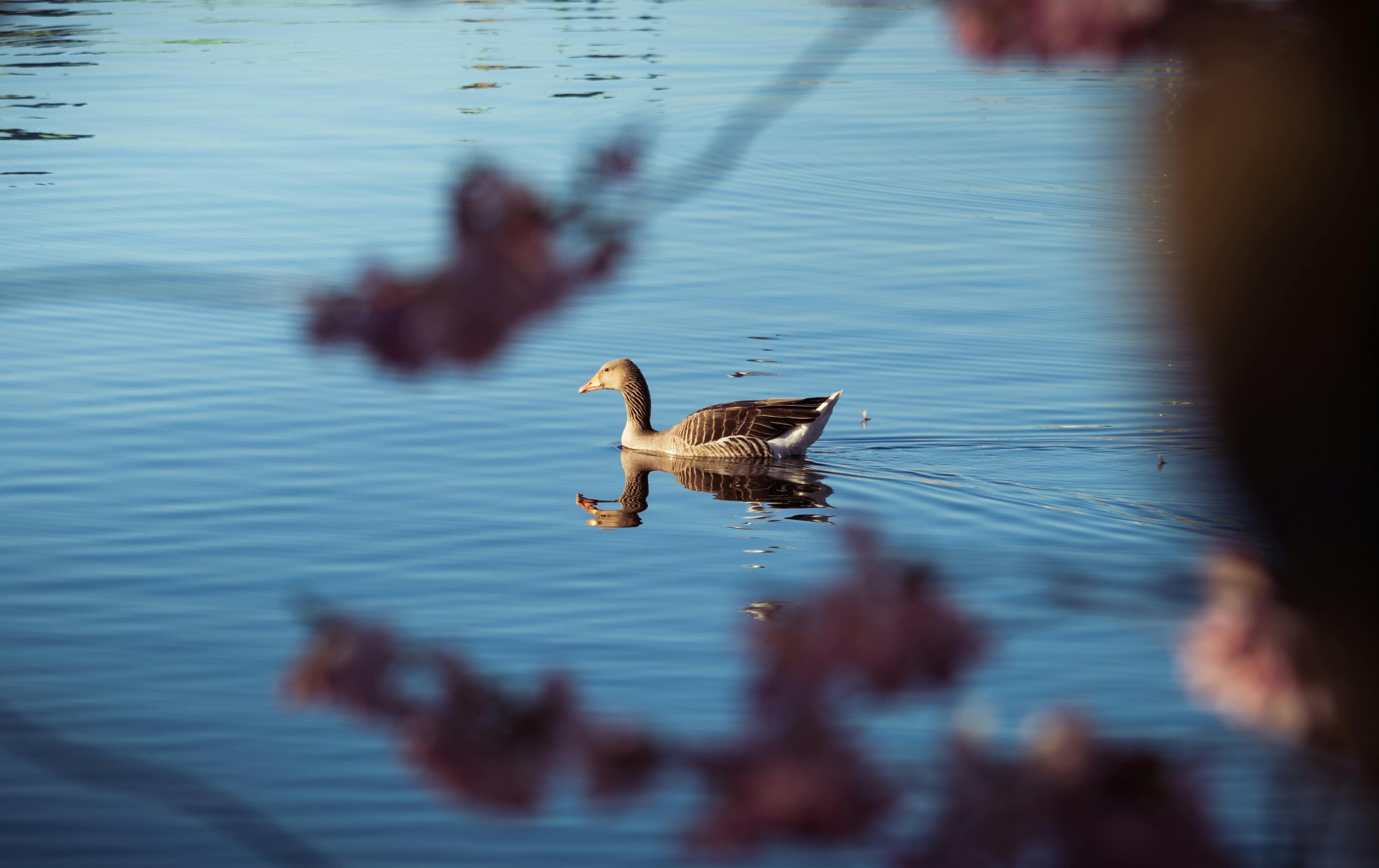
Fall isn’t just foliage. It’s the smell of wood smoke starting up again, the wild geese flying over honking their warnings of impending cold, and apple cider donuts at every farm stand.
And winter? Winter is the season that makes you earn it. Some winters are gentle—early snow, mild temperatures, the kind that make you think I could do this forever. Some winters are like this one—relentless, testing, the kind that make you dig deep and remember why you’re here.
Both are true. Both are winter. Both are home.
The Magic of Being Tied to Place
There’s something almost magical about living in a place where you can’t ignore the natural world. Where the seasons dictate the rhythm of your life whether you want them to or not.
Last spring was too rainy. We complained about it. The trails were muddy for weeks longer than usual, the rain hit like clockwork on the weekends, everything felt damp and slow to dry.
This winter has been brutally cold. We’ve muttered grumpily about that too. The kind of cold that makes you wonder, just for a moment, if maybe you want a condo in Florida overlooking a golf course after all.
But here’s the thing: we’re still here. And we’re not just enduring it. We’re paying attention to it. Thriving in it. Noticing it. Letting it shape how we move through our days.
When the seasons are hard, they ask more of you. And when you show up anyway—when you adapt, when you find the small graces, when you let your body love this place even when it’s not easy—that’s when you know you’re home.
Not because it’s always comfortable. But because it’s true.
When Your Body Knows
This is what we’ve learned after years of living here, after watching people move to the Lakes Region from cities and suburbs, after helping families navigate what it actually means to make a life in a place where the seasons aren’t just background—they’re the whole story:
You can’t logic your way into the right place. Your body has to love it.
Some people visit in July—when the lake is warm and the sun stays out until 8:30 and everything is green and lush—and they think, Yes. This is it. And they’re right.
Some people visit in February—when it’s 10 degrees and the snow is blowing across the road and the sun sets at 5:02—and something in them settles. They feel the cold and the quiet and the way the light hits the frozen lake, and they think, Yes. This is it. And they’re right too.

It’s not about finding the “perfect” season or the “easy” season. It’s about finding the place where you feel the hum of yes even when conditions aren’t ideal. Where you’re willing to show up for the hard moments because the connection to place is deeper than comfort.
That’s what Oliver meant. Let the soft animal of your body love what it loves.
Not what makes sense on paper. Not what seems practical or easy or convenient.
What your body loves.
Closing
We’re writing this in early February, when the snow is still deep and the cold hasn’t broken and spring feels impossibly far away. But the light is getting longer. The days are stretching. And we know—because we’ve done this before—that one morning soon, we’ll wake up and the air will feel different. Softer. Like something is shifting.
We’ll open the windows for a few hours in the afternoon and then shiver when we go to close them before bed. Maybe you’ll be here to notice the first sap buckets appearing on the maples with us. You’ll get to hear the ice on the lake start to crack. Maybe you’ll just feel it—the way your body knows spring is coming before your mind does.
Not all winters are made the same. Not all springs, not all summers, not all falls.
And if you’re here—really here, embedded in this place and these seasons—that’s not a problem to solve.
That’s the whole point.
Here's to knowing when you've found your place.
🧭 Jenn & Andrea, Keys to the Lakes
