

Winter here is just getting started. The ice on the lakes is finally thick enough for fishing shanties, the snowmobile trails are in prime condition, and we’re settling into that rhythm where you stop checking the forecast every morning because you already know: cold, more cold, chance of snow.
This is exactly when you should be thinking about selling your home in May.
We know. It sounds early. The spring market feels impossibly far away when you’re still adding layers before you leave the house and the idea of open windows and fresh air is purely theoretical.

But here’s what we know from helping people buy and sell homes in the Lakes Region: the sellers who start preparing in January close smoother, show better, and stress less than the ones who wait until the snow melts to realize their deck needs staining and the tile guy is booked until August.
So if you’re thinking about listing this spring—or even if it’s just a seed an idea—this is your moment. Not to panic. Not to overspend. Just to get ahead of the quiet chaos that comes when everyone else realizes it’s time to get their homes ready at exactly the same time.
Why January Is Your Secret Advantage
By the time the forsythia blooms and open house signs start appearing on every corner, three things will be true:
1. Every contractor worth hiring will be booked solid.
The tile guy you need? He’s doing three bathroom renovations in Wolfeboro and a kitchen backsplash in Meredith. The landscaper who could fix your front walkway? Already committed to April projects. The painters? Don’t even ask.
2. Material lead times will feel eternal.
That custom vanity you thought would take two weeks? Try six. The light fixture you ordered in March might arrive in time for your June closing. Maybe.
3. You’ll be competing with every other seller who waited.
When everyone’s scrambling to get open house ready at once, you don’t want to be one of them.
Starting now, while it’s quiet, while the amazing tradespeople are finishing winter projects and looking ahead (or bored in Florida and looking to book jobs so they can head home) means you can move deliberately. You get first pick of scheduling. You avoid the spring rush markup some contractors quietly add when they know you’re in a bind.
And honestly? It just feels better to make decisions about your home when you’re not also fielding showing requests and obsessively checking your listing stats.
The Lakes Region Reality Check
Here’s what we want you to know, and we mean this kindly: your home is going to sell based on condition, location, and price. In that order.
Yes, this costs money. But think of it as protecting your sale price, not spending on upgrades. A $1,500 investment in fixing a roof leak can prevent a $10,000 hit during negotiations. A $300 plumbing repair now beats a deal falling apart when the buyer’s inspector finds it.
You can’t change the location. But you can absolutely control the condition and set a realistic price.
What buyers in this market are actually looking for:
Homes that won’t surprise them with expensive repairs in the first year
Spaces that feel cared for, even if they’re not updated
Clarity—they want to know what they’re getting, not guess at what’s behind the walls
What buyers are willing to overlook:
Older appliances (if they work)
Dated finishes (if everything else is solid)
Quirks of older New England homes—low doorways, slanted floors, radiators that clank
What buyers won’t overlook:
Evidence that you stopped caring five years ago
Major systems that are failing or failed
Mold, water damage, or pest issues you tried to hide
Your job isn’t to renovate your home into something unrecognizable. It’s to present it honestly, clean it thoroughly, and fix what’s broken.
The Non-Negotiable Prep List
Some things every seller should do, regardless of timeline or budget:
1. Fix the things that make buyers nervous.
Electrical outlets that don’t work
Plumbing leaks (even small ones)
Roof issues or visible water damage
Cracked windows
A furnace or water heater on its last legs
Buyers can overlook dated tile. They panic over deferred maintenance that suggests bigger problems.
2. Make your home show-ready, not showroom-ready.
Clean like someone’s mother-in-law is visiting. Then clean again.
Depersonalize. Family photos, political signs, collection of shot glasses from every state—pack them.
Let in the light. Open curtains, replace burnt-out bulbs, consider higher-wattage LEDs in dim spaces.
Make it smell like nothing. Not cookies, not plug-ins, not last night’s salmon. Just fresh, clean air.
3. Curb appeal still matters, even in winter.
Shovel and salt walkways promptly
Trim back overgrown shrubs blocking windows or the front door
Power wash the house if temperatures allow (or plan for early spring)
Make sure the house numbers are visible from the street
If your front door looks tired, paint it. It’s a $50 project that makes a $5,000 impression.
4. Get your agent involved early.
Walk your property together to identify issues that need addressing. An experienced agent has seen enough buyer reactions to know what will get flagged and what won’t matter.
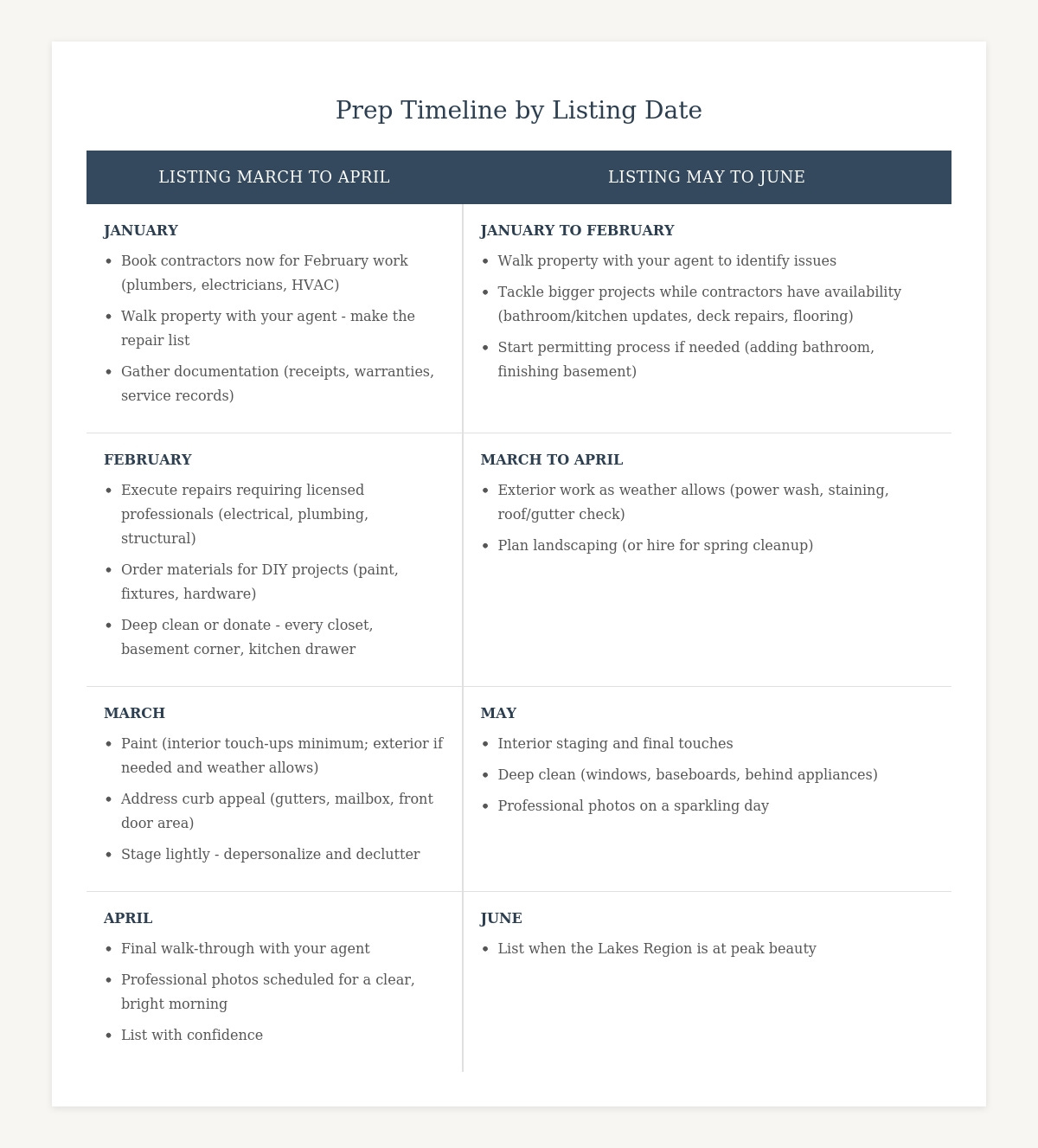
If You’re Downsizing (And Feeling Overwhelmed)
This process is different. It’s not just about preparing a house—it’s about closing a chapter. Give yourself grace and time.
Start now, move slowly:
Begin sorting one room at a time. Not “someday I’ll deal with the attic.” Literally, this week: the guest room closet. Next week: the kitchen cabinets.
Three piles: keep, donate, unsure. The unsure pile can sit in the basement for now. You don’t have to decide everything today.
Consider hiring help. There are senior move managers, estate sale companies, and organizers who specialize in exactly this. It’s not admitting defeat—it’s being smart about your energy.
February–March:
Once you’ve cleared enough to see the bones of the house, walk through it with your agent to assess what needs attention.
Make a list of repairs together. Decide what’s worth doing and what you’ll disclose and price accordingly.
If you’re moving to a smaller place, start measuring. That couch you love? Will it fit? Knowing now prevents heartbreak later.
April–May:
Handle necessary repairs. Let go of the guilt about not doing the “nice to haves.” You don’t owe the next owner a renovated kitchen if that’s not in your budget or bandwidth.
Stage lightly, clean thoroughly, and trust that the right buyer will see the value in your home.
The reminder you might need:
Your home doesn’t have to be perfect. It has to be honest, clean, and cared for. The buyers who fall in love with a Lakes Region home aren’t looking for a showroom—they’re looking for a life here. Give them enough space to imagine it.
What If You’re Still Deciding Whether to Sell?
Maybe you’re reading this and thinking, “I’m not sure yet. Is it worth starting?”
Here’s our take: even if you don’t list this spring, everything on this list makes your home better to live in. A fixed leak, a freshly painted room, a decluttered basement—these improve your life now, not just your sale price later.
And if you do decide to sell, you’ll be ready. No scrambling, no last-minute contractor panic, no showing your home while it’s half-torn-apart.
Questions to ask yourself:
If I could wave a wand and be moved into my next place tomorrow, would I do it?
Am I staying here because I love it, or because selling feels overwhelming?
What would need to be true for me to feel ready?
If you want to talk through it—no pressure, no pitch, just honest conversation—we’re here. We’ve done this enough times to know that sometimes the hardest part is just naming what you actually want.
A Final Thought: The Gift of Starting Early
There’s a particular kind of peace that comes with being prepared.
It’s the difference between scrambling to patch drywall the morning of your first showing and knowing your home is already ready. Between hoping the buyer’s inspector doesn’t find the thing you were worried about and already having addressed what you know needs fixing. Between racing to find a contractor in April and having already scheduled the work in February when they had openings.
Starting now doesn’t mean you’re in a rush. It means you’re in control.
The snow will melt. The lakes will thaw. The spring market will arrive whether you’re ready or not.
But if you start today—if you make the list, schedule the inspector, call the plumber—you’ll move through the next few months with intention instead of panic. And when it’s time to list, you’ll do it with confidence, knowing you’ve done right by the house and by yourself.
Here’s to getting ahead of it while the ground is still frozen.
🏡 Keys to the Lakes
— Jenn & Andrea
P.S. Need a contractor recommendation? We’ve worked with most of the good ones around here (and learned the hard way about a few to avoid). Reach out—we’re happy to share names.