I don’t have Abenaki ancestry, and I’m not an historian. This isn’t my story to tell from the inside, and I want to be be totally transparent about that. What I can offer is some observations, imperfect at best, pulled from what’s documented. I did a deep dive into available sources, read carefully and have attempted to base the argument I want to make on analysis of those expert sources. I didn’t want to simply share a set of facts.
Here’s the argument, which isn’t a particularly controversial one. Long before any farmhouse in this region existed, long before deeds or property lines or we had a concept of “resort”, seasonal rhythm wasn’t a preference here. It was just how life was. Spring meant the fish, or it meant a much harder year. Fall meant getting a set of hard calculations right, or paying for it in January. That fact isn’t some distant, unrelated past. It’s still the truest thing about living in this region, whether or not most of us here now would ever put it in those terms. Maybe we don’t dry fish to eat through the winter, but we rely on tourist dollars earned in summer to fund programs we need in the winter.
I make my living helping people decide where and how to live in this region. That’s not a small thing to be responsible for, and I don’t think I’m doing it all that well or with integrity without understanding what this land actually demanded of the people who lived here first, on the land’s terms, not chosen as a summer retreat, but stewarded as a relationship based on mutual respect, and not a little awe.
That’s not nostalgia. It’s not a lifestyle I’m holding up as an ideal, per se. Personally, I really like being able to eat strawberries in my winter oatmeal. I do, however, think what came before deserves to be understood because it still shapes how we live here today, and everything that came in between.
Spring
The year turned on the fish, and nothing else really moved until that turn happened.
Every spring, at falls and rapids throughout the region, families gathered for the fish runs. Shad, salmon, alewife, moving upstream to spawn in numbers that are hard to picture now. People built weirs, fence-like traps made of stone or wood, to funnel fish into shallow water where they could be caught by hand or with spears from a canoe. Amoskeag Falls, on the Merrimack near what’s now Manchester, was one of the largest gathering points in the region, drawing people from well beyond the Lakes Region for fishing, trade, and the wider social fabric that a shared, reliable food source made possible.
Closer to home, the Weirs, that stretch of shoreline every summer visitor to Winnipesaukee already knows by name, gets that name honestly. It was a fishing site first. The structure built there to catch fish gave the place its English name centuries later, whether the people using it today know that or not. This region is peppered with words we use casually around here, Winnipesaukee, Ossipee, Merrimack, Chocorua, Pequawket, Monadnock, that aren’t affectation. They’re remnants of a language that once rang out across the lake and in the woods where we now hike for recreation.
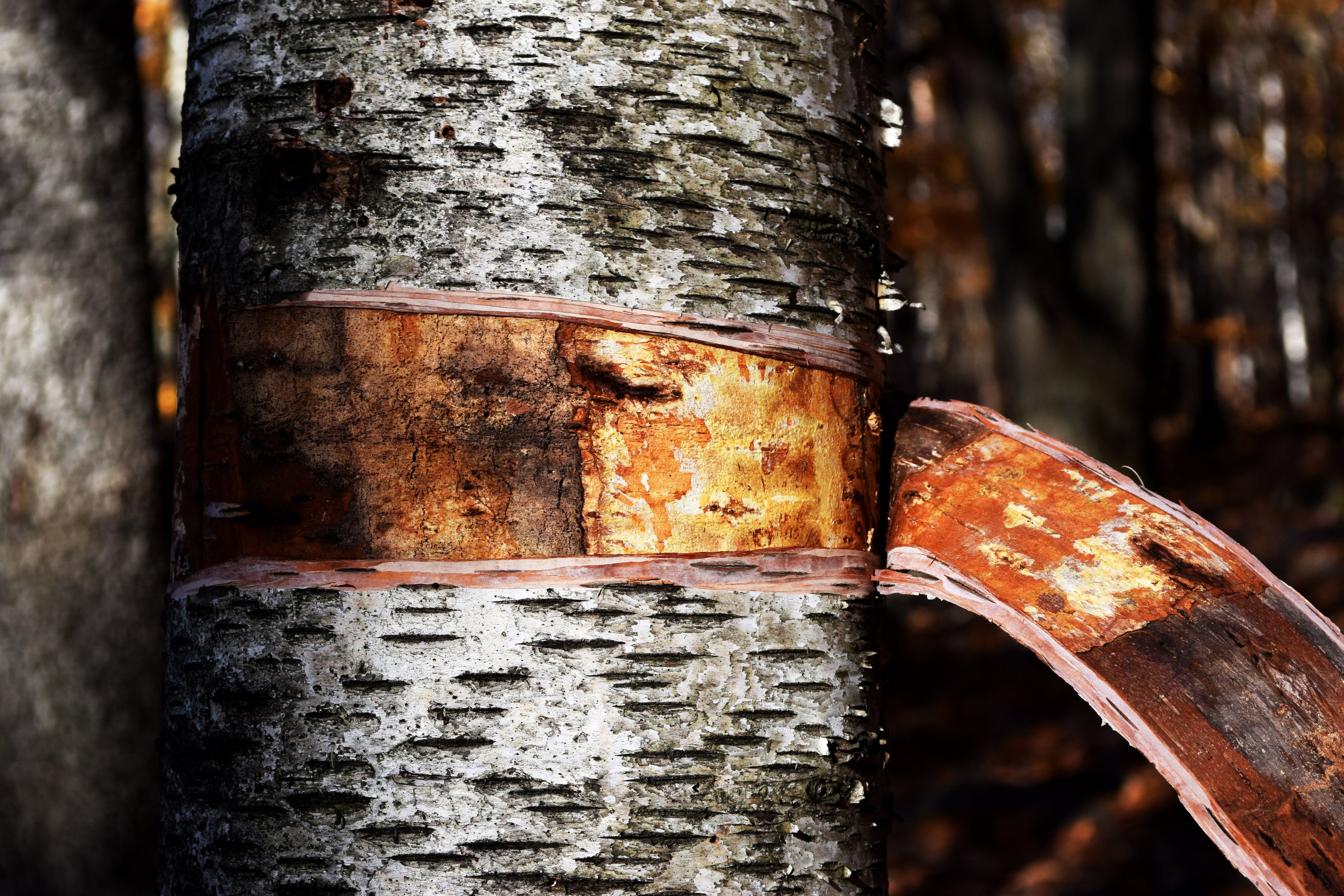
Spring also meant travel. River travel was done in light, flexible birch bark canoes, easy to carry overland when the water ran out. Building one took weeks of skilled, exacting work. This wasn’t casual, like the way I throw a canoe I bought online onto my car and head out on a whim.
Summer
By early summer, families had settled into villages, always close to water, for drinking, for travel, for the fish that mattered as much as anything grown in a garden. Wigwams went up in a half circle, close enough that the work of the season could be shared rather than carried alone.
This was planting season too. Women and children tended plots of corn, beans, and squash, grown together in a method that fed the soil instead of stripping it, a detail that still strikes me given how much of this region’s more recent agricultural history involved land being farmed or timber harvested until it gave out. When you see a field covered in invasive bittersweet, thats a field that could have been better stewarded. For open water, families used heavy dugout canoes, carved from white pine, built for the lake itself rather than the rivers feeding it. The band associated with Winnipesaukee carried that lake’s name for a reason. So did the Ossipee band, further east. These weren’t separate nations so much as extended family groups, each with a defined territory for hunting, fishing, and small scale farming, moving within it deliberately as the year turned.
Fall
If spring was about the fish, fall was about everything else, and it asked more of people than any other season did.
Fish caught in spring and summer had already been smoked and dried for months of storage. Crops were harvested and sorted, some kept fresh as long as possible, the rest packed into underground storage pits dug and lined with care, a technique this region’s Abenaki had that their northern relatives, working a shorter growing season, didn’t have the luxury of using. This wasn’t a single afternoon of canning the blueberries you gathered on an outing, like I play at each summer. It was weeks of continuous, exacting labor, and it required real expertise. What to keep. What to let go. Get that math wrong and the consequence wasn’t inconvenience. It was a hard winter made harder, privation, and hunger.
There’s a version of this I could tell you that sounds peaceful, all golden light and baskets of corn. That would rhyme nicely with the beautiful tones of fall leaves and the maple syrup and apple picking we all enjoy now. I don’t think that’s honest. Fall here was a hard, high stakes negotiation with a season that was about to turn dangerous, and everyone involved knew exactly what was riding on getting it right.
Winter
Winter was spent settled rather than constantly on the move, and that settled time became its own kind of essential labor. Trapping continued through the cold months, particularly beaver, valuable for both fur and food. Tools were made and repaired. Skins were tanned. And I’d guess, though this is closer to inference than documented fact, that winter was when knowledge moved between generations most deliberately. My imagination tells me that winter fires was when there was finally time for someone older to teach someone younger the essential medicine and meaning making that couldn’t be taught in the middle of a fish run.
None of that made winter gentle. New Hampshire winters were not, and are not, for the faint of heart. Even now, keeping an eye on your oil tank can mean the difference between riding out a storm in comfort and begging Eastern Oil to make an emergency delivery mid-tempest. A community that had judged the fall correctly could settle in. One that hadn’t faced real threats to survival. I don’t want to soften that. It wasn’t a season people found charming. It was a season people respected, exactly the way you respect something that could genuinely hurt you, and they built an entire year’s worth of labor around making sure it didn’t.
What broke this
I’m not going to pretend this story moves smoothly from an established, thriving culture into the present day. By the early 1600s, European ships were fishing off the coast, and exploring the land for plunder and settlement and with them came disease the Abenaki had no immunity to. Smallpox and influenza tore through populations between roughly 1615 and 1620, before most English settlement had even begun in earnest. It wasn’t raiding parties and war that decimated the indigenous communities of this area, not yet. It was disease.
The man who led the Pennacook through what came after was named Passaconaway, and his seat of power was Amoskeag Falls, the same falls where families had gathered every spring for generations to fish. He chose diplomacy. For decades, while conflict flared elsewhere in the region, Passaconaway held peace with the English, negotiating and absorbing setback after setback rather than going to war. In 1642, English soldiers went looking for him on a false rumor of an uprising. They didn’t find him, but they found his son, Wonalancet, and held him for roughly two years before releasing him. Passaconaway kept the peace anyway.
It didn’t save the land. By the 1660s, English settlement had pushed so far into Pennacook territory that Passaconaway, the man who had once ruled all of it, had to formally petition the colonial government for a small plot to live on. Decades of careful diplomacy and realism had bought his people time. It never bought them back their land, or the kin lost to european diseases, and it was never going to.
Then came further war, competing claims on land that had never been understood as ownable in the first place, and a slow, brutal displacement. Many families moved north into what’s now Quebec, to communities like Odanak, where their descendants live today. By the end of the century, the population of this region looked nothing like it had a hundred years before. That is the direct, traceable reason the landscape I sell houses in today looks the way it does, and I don’t think that fact should sit quietly in a footnote.
Where this gets complicated
The story of Abenaki identity in New Hampshire today is not settled, and I want to be careful with it rather than tidy about it. New Hampshire is the only state in New England with no state or federally recognized tribe. Several groups here identify as Abenaki, but the two federally recognized Abenaki First Nations, Odanak and Wôlinak, both in Quebec, have said publicly and repeatedly that most of these New Hampshire groups have no demonstrated ancestral connection to Abenaki communities. It’s an active, unresolved dispute, with real people and real stakes on every side of it.
What I think we still owe this history
There’s no clean line from what I’ve just described to where we are now. Colonization broke that continuity in cruel and tragic ways. But there are some important throughlines. There are still tensions here between who is of this region and who is just visiting. This region still runs on its seasons. It still punishes people who forget that, whether you’re two hundred years removed from a storage pit or two winters into your life here.
There’s a smaller, second thought sitting alongside that one. I’ve written before about what it means to be a steward of an old house, caring for something you didn’t build and won’t be around to see the end of. Looking honestly at what I’ve just described, I notice this region’s relationship with its land and water has swung between real care and real damage more than once in the centuries since, the clearing, the overfishing, the water quality fights, land pushed past what it could give. I’m not claiming any lineage to the people who lived here first or even real knowledge about what their lives were like. I simply can’t. I’m only saying the mistakes this region keeps having to relearn aren’t new mistakes, and that seems worth sitting with too.
I live in a house that’s two hundred and fifty seven years old, and I would be lying if I said I wasn’t really curious about what this land was like when the house first went up. That felt like a gap worth closing, not because the past is quaint, but because I think the seasons this region runs on are still trying to tell us something, if we’re willing to actually listen instead of just admiring the view.
Here’s to seeking to understand what came before.
🧭 Jenn
Keys to the Lakes